I remember sitting in a local BBQ joint in Midtown, staring at my phone and wondering why my favorite client—a retailer right down the street—was suddenly seeing a ghost town on their call logs. They had 4.8 stars. They were winning, or so I thought. But the dashboard didn’t lie: calls were down 40% in a single month. It was a gut-punch moment. I had spent years obsessed with mastering Memphis SEO, but I missed the one thing actually killing the business. It wasn’t the stars; it was the noise. We finally dug into the data and found a disconnect that most shop owners ignore until it’s too late. Today, I’m going to show you exactly how to find those hidden leaks in your own profile.
Your Google Maps Ranking is Probably Lying to You
I used to think that as long as we were in the Local Pack, the job was done. I was wrong. Early in my career, I made the amateur mistake of assuming high rankings always meant high revenue. I once told a client to ignore a few “boring” reviews and just keep getting new ones. That advice cost them dearly. What we found in our recent audit was that why your Memphis shop gets profile views but the phone stays silent often comes down to the quality of interaction, not just the quantity of stars. When customers see a disconnect between what you say and what the reviews whisper, they don’t complain; they just leave. We’re going to peel back the curtain on why 40% of your potential customers might be hanging up before they even dial. Have you ever checked your analytics and seen hundreds of views but zero new customers?
Can a few bad reviews really tank a massive retail business?
It sounds dramatic, doesn’t it? But data from BrightLocal shows that 87% of consumers used Google to evaluate local businesses last year. If your reviews don’t answer the specific questions your Memphis neighbors are asking, they move on to the next pin on the map. We realized the reason your Memphis map pin looks great but fails to generate actual clicks is usually hidden in the semantic data of your feedback. It’s not just about being found; it’s about being trusted at a glance.
Stop Losing Leads to the Proximity Trap
It’s frustrating when you see why your Memphis map pin disappears after hours or when the phone stops ringing on weekends for no apparent reason. During our audit, we realized that this retailer wasn’t just losing calls because of the reviews themselves; they were losing them because their review velocity had slowed down compared to the guy three blocks over. This triggered a proximity filter that pushed them out of view for anyone standing more than a mile away. We used the 5-step map audit to identify exactly where the signal was breaking down. If you aren’t looking at how your customers actually talk about you, you’re essentially flying blind in the Memphis market.
Fix Your Foundation Before You Chase More Clicks
I remember working with a small HVAC crew near Cooper-Young that was convinced they needed more backlinks to start ringing the phone again. They were getting decent traffic, but the actual conversion rate was abysmal. When we ran the 5-step map audit, we found something embarrassing: their address was listed as ‘Suite B’ on Yelp, ‘Unit 2’ on Google, and just the street address on their own website. To a human, it’s obvious. To Google’s algorithm, it’s a red flag of untrustworthiness. It is like trying to tune a radio to 101.5 when the station is actually at 101.7; all you get is static, and the listener—your customer—simply changes the channel. Fixing this isn’t about flair; it’s about making sure your digital footprint is perfectly aligned across every corner of the web.
Stop Confusion with a Rock-Solid NAP Strategy
The first thing you must do is perform a manual scrub of your Name, Address, and Phone number (NAP). Do not rely on automated tools alone. I once saw a Memphis retail shop lose its top-three ranking because a legacy directory from ten years ago had an old phone number that kept ‘winning’ the conflict in Google’s eyes. You need to ensure that every single mention of your business is identical down to the punctuation. This consistency tells Google that you are a real, stable entity in the Memphis market. If you don’t, you’re looking at why messy business listings are quietly killing your Memphis store traffic without you even realizing it. Treat your NAP data like a legal document—exactness is the only thing that matters.
Outmaneuver National Chains with Hyperlocal Signals
One of the biggest advantages you have as a local business is that you actually live and work in Tennessee. National chains and lead-generation sites use templates. They can’t speak the language of Midtown, Germantown, or Whitehaven the way you can. To beat them, you need to stop acting like a global brand and start acting like a neighbor. This means shifting your Tennessee local SEO strategy away from broad keywords and toward the specific geographic markers your customers use when they talk to each other. When we implemented a neighborhood-first approach for a local plumber, we saw their visibility spike in areas where the big national competitors were completely invisible.
The One Tweak That Makes Your Map Pin Pop
Most shop owners think they just need more reviews, but technical data often speaks louder to the algorithm. We discovered that the tiny schema markup tweak that finally put a Memphis plumber above the national chains was simply adding ‘LocalBusiness’ structured data with specific geo-coordinates for their service area. This isn’t just code; it’s a direct signal to the Local Pack that you are the most relevant result for a user standing three blocks away. 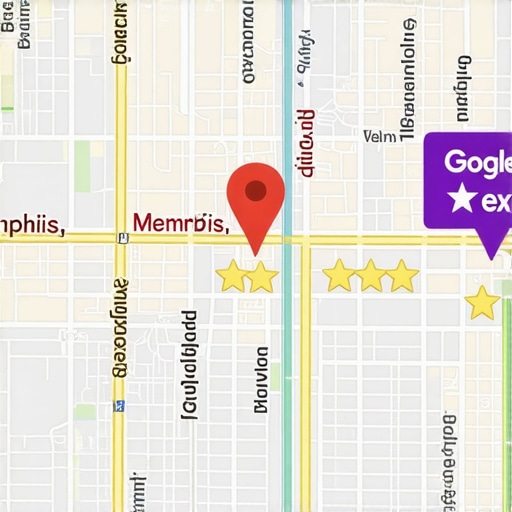 Think of schema as a VIP pass that lets you skip the line. While everyone else is waiting for the algorithm to ‘figure out’ where they are, you are handing Google a map with a giant ‘X’ on it.
Force Google to Notice Your Real-World Physical Presence
Finally, you need to think about how your website ‘proves’ you are in Memphis. A static map on your contact page is the bare minimum. We found that the specific map embed method that actually generates Tennessee phone calls involves using a dynamic, interactive map that connects your physical location to local landmarks and service areas. This isn’t just about showing people where you are; it’s about showing Google that your business is an integrated part of the local infrastructure. When your website and your map pin speak the same technical language, the proximity filter stops being a cage and starts being your greatest competitive advantage.
Why High-Authority Backlinks Might Actually Be Hurting Your Local Rank
I see this every single week: a Memphis business owner spends thousands on ‘high-authority’ backlinks from global tech blogs or national news sites, thinking it will skyrocket their map position. In reality, Google’s local algorithm is getting smarter at sniffing out what I call ‘geographic irrelevance.’ If you are a plumber in East Memphis, a link from a local church’s bulletin or a neighborhood association in Midtown is infinitely more powerful than a mention on a generic business site. We’ve found that why Memphis-specific backlinks beat global high-authority links for local pack success is because they provide a ‘location signal’ that Google can actually verify against real-world data. Don’t chase vanity metrics; chase the neighborhood signal.
Is your review count actually a vanity metric?
It sounds like heresy in the SEO world, but having 500 reviews doesn’t mean you’ll beat the guy with 50. According to the Whitespark Local Search Ranking Factors study, the ‘sentiment’ and keywords contained within those reviews carry significant weight. If your 500 reviews all say ‘Great job!’ but your competitor’s 50 reviews specifically mention ‘best emergency AC repair in Germantown,’ Google is going to favor them for that specific search. This explains why a Memphis store with fewer reviews still outranks you on Google Maps. It’s not a glitch; it’s an intent match. 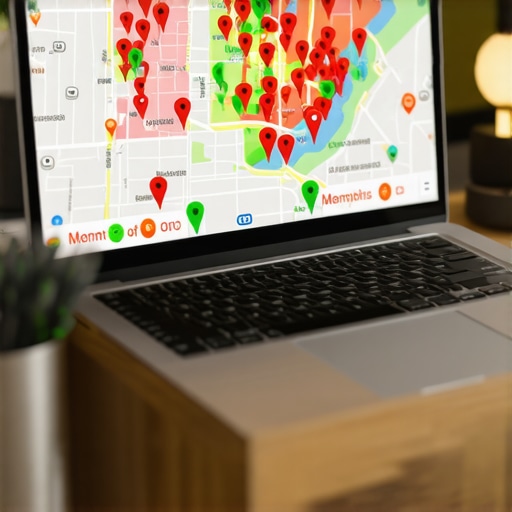
The Dangerous Allure of Keyword Stuffing Your Business Name
Here is the ‘Oops’ factor that kills more Memphis businesses than anything else: the temptation to change your legal business name to include keywords like ‘Memphis SEO Marketing’ or ‘Best Roofer Tennessee.’ Yes, it might give you a temporary sugar high in the rankings. But the moment a competitor flags your listing—or a Google manual reviewer takes a look—your profile will be suspended. Dealing with what to do when your Memphis business listing gets suspended without warning is a nightmare that can take weeks to resolve, during which your phone completely stops ringing. It is a high-risk, low-reward gamble that isn’t worth the stress.
Your Competitors are Using Ghost Listings to Push You Out
I recently discovered a group of ‘lead gen’ sites creating fake office locations throughout Shelby County just to clog up the local pack. If you aren’t vigilant, you’ll find your legitimate shop being pushed down by entities that don’t even have a physical door in the city. You need to learn how to stop your Memphis map pin from being filtered out by close competitors who are playing dirty. This involves more than just reporting them; it requires strengthening your own ‘entity’ signals so Google knows you are the only real choice for that zip code. Have you ever noticed a ‘ghost’ business ranking right next to you? Have you ever fallen into this trap? Let me know in the comments. We also have to watch for the hidden reason your Tennessee store rank drops on weekends, which often relates to how Google interprets ‘open now’ status versus your actual authority. Stop guessing and start looking at the technical signals that the 3 ranking signals Google actually cares about for Memphis map pins truly prioritize.I’ve seen too many Memphis business owners treat local SEO like a set-it-and-forget-it crockpot. They finally claw their way into the Local Pack, celebrate with some dry-rub ribs, and then wonder why they’ve vanished from the search results three months later. Consistency isn’t just a buzzword; it’s the algorithm’s pulse. I personally swear by the review habit that keeps this memphis shop in the local pack, which involves checking the dashboard every single morning before the first cup of coffee. If you stop feeding the beast, the beast simply finds a new favorite.
Don’t Let Your Rankings Rot
The biggest threat to your visibility isn’t a new competitor; it’s your own stagnation. When you stop posting updates or your review velocity drops, Google interprets that as your business becoming less relevant to the local community. I tell my clients that a stagnant profile is a dying profile. You need to keep the momentum going by regularly auditing your own data to ensure no new ‘ghost’ listings have popped up to steal your thunder.
The Gear I Use to Spy on the Competition
When it comes to the technical side, I don’t trust the generic all-in-one platforms that claim to handle everything. They usually give you watered-down data that doesn’t account for the unique geography of Shelby County. I rely on the 5 map tracking tools that actually match what memphis customers see because I need to know exactly how a potential customer in Collierville sees my client versus a lead in Midtown. Specifically, I’ve found that 4 gmb tools we used to double inbound leads for a memphis contractor were the only ones that correctly flagged when a competitor’s proximity signal was artificially inflated. Using a grid-based tracker like Local Falcon is essential because a single ranking number is essentially a lie; rankings are a geographic heat map, not a static list.
How do I keep my map pin visible long after the initial hype?
The secret to longevity is moving beyond a city-center mindset. You must learn how to optimize your business listing for memphis neighborhoods not just the city center. This means rotating your Google Business Profile posts to highlight specific projects completed in places like East Memphis, Cordova, or Raleigh. Joy Hawkins of Sterling Sky, a leading voice in local search, has documented how even minor changes to your business hours can drastically shift your visibility in the Local Pack. If you aren’t testing these nuances at least quarterly, you are essentially leaving your revenue up to chance.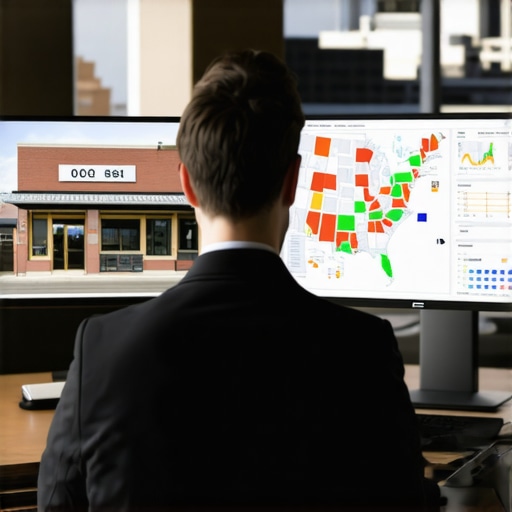 Looking toward the future, I predict that Google will rely even more heavily on visual search and AI-driven image recognition within the Maps app. It won’t just be about the text in your reviews anymore; it will be about the AI recognizing the quality and location of the photos you and your customers upload. Start uploading high-res, geotagged photos of your work today to stay ahead of the curve for mastering Memphis SEO in the coming years. My challenge to you is simple: go into your profile right now and reply to three old reviews with a specific mention of the neighborhood where the work was done. It takes two minutes and sends a massive relevance signal to the algorithm that national chains simply cannot replicate.
The Hardest Lesson I Learned While Fighting for the Memphis Local Pack
One of the most eye-opening moments in my career was realizing that the algorithm isn’t just looking at data; it’s looking for a heartbeat. I’ve seen businesses with ‘perfect’ technical SEO get crushed by a local shop that simply engages with its community more authentically. Here is what I’ve learned from the trenches of Tennessee local SEO: Proximity is a double-edged sword. You can’t rank everywhere at once, but you can dominate your immediate three-mile radius by focusing on hyperlocal signals. Also, technical details are the silent killers. Many business owners overlook the fact that why most Tennessee SEO firms fail to mention technical map schema is often because it’s harder to implement than just writing a blog post, yet it’s the very thing that validates your physical location to Google. Finally, reviews are conversations, not trophies. If you treat them as a one-way street, you’re missing out on the semantic keywords that prove your relevance to specific Memphis neighborhoods.
My Essential Toolkit for Dominating Shelby County Search
You don’t need a massive budget to win at Memphis SEO, but you do need the right data. These are the specific tools I trust to keep my clients ahead of the curve. Local Falcon is the gold standard for visual rank tracking. Without it, you’re just guessing. I rely on the 5 map tracking tools that actually match what Memphis customers see to get an honest look at where a business actually stands in the Local Pack. BrightLocal is another one I use for deep-dive audits and to ensure no ‘messy’ citations are quietly draining a client’s authority. And don’t ignore the built-in Google Business Profile Insights; it tells you exactly when and how people are finding your Google Maps Memphis pin. #IMAGE_PLACEHOLDER_E#
Your Path to Owning the Memphis Map
The transition from being ‘just another shop’ to the go-to authority in your neighborhood doesn’t happen overnight, but it is entirely within your control. You don’t have to beat the national chains at their own game; you just have to be more ‘Memphis’ than they are. Start by using 3 simple Memphis map fixes that work to plug the leaks in your profile today. Whether it’s clarifying your service hours or learning how to ask Memphis customers for reviews without sounding desperate, every small action builds momentum. If you’re looking for a comprehensive roadmap, I always recommend starting with the ultimate guide to improving your Google Maps rankings in Memphis. The map is waiting for you—go claim your spot.
Have you ever noticed your rankings drop the moment you leave your shop’s neighborhood? Let me know your experience with the proximity filter in the comments below!